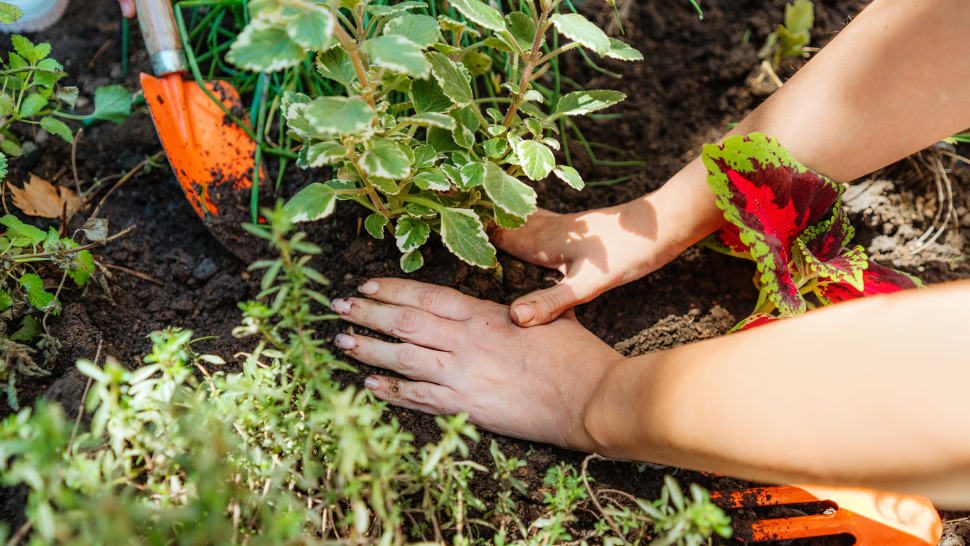
What if better health was just a few steps outside your door? Whether you’re tending a backyard plot, planting herbs on a windowsill, or sowing seeds in a community garden, growing your own plants offers benefits that go far beyond what ends up on your plate. These benefits include reduction in mental health issues such as anxiety, depression, stress, and anger; lower instances of diabetes, obesity, and heart disease; and reported increases in life satisfaction, quality of life, longevity, and sense of community.
Find your slice of green space and use these tips to get your vegetable garden growing:
Location, location, location. Find a sunny spot with well-drained soil or build a raised bed (this is easier than you think – it doesn’t have to have sides!). Most plants (except some leafy ones) require at least 6 hours of sunlight each day. If you don’t have a backyard or an ideal spot to plant, check into community gardens or consider container gardening.
Start with easy–to–grow vegetables. Good beginner plants include tomatoes, zucchini (beware – they get huge fast), peppers, cucumbers, winter squash, herbs, and greens such as lettuce, chard, spinach, and kale. Preferably, choose vegetables you and your family like to eat. Get started quickly by buying seedlings from your local garden center. They may be more expensive than seeds, but it’s one less step toward picking those cherry tomatoes.
Timing is everything. Different vegetables grow at different times depending upon your climate zone. Greens and root vegetables are typically planted in early spring, while tomatoes, peppers, squash, and vegetables that grow well in warmer weather go in after the last frost. Use the Farmer’s Almanac Planting Calendar to help you decide when to plant vegetables in your area.
Be sun-strategic. Plant rows north to south to maximize sun exposure. Put tall vegetables or plants that use a trellis on the north side to avoid shading smaller plants.
Start small, grow big. You’re doing this for enjoyment – not an added stressor! Even if you have extra space, keep your garden to a manageable size. Learn how long it will take crops to mature and when they‘re typically harvested. Quick–to–mature plants can be planted multiple times throughout the season if you find you can handle more.
Get buggy (the good kind). Add pops of vibrant colors to your garden to attract pollinators and other insects. Consider flowers such as marigolds, blazing star, butterfly weed, goldenrod, bee balm, and mountain mint.
Gardening is a hands-on way to support both personal and environmental well-being. Spending time in the garden encourages movement, reduces stress, and creates a deeper connection to the food you eat. But the benefits don’t stop there. Growing your own food can also provides access to fresh, seasonal ingredients harvested at their peak, which means the flavors will be so much more irresistible that you won’t be able to harvest without snacking.